jueves, 18 de febrero de 2016

CYBER BULLYING

Cyberbullying on social media is linked to depression in teenagers, according to new research that analyzed multiple studies of the online phenomenon.
Victimization of young people online has received an increasing level of scrutiny, particularly after a series of high-profile suicides of teenagers who were reportedly bullied on various social networks. In 2013, for example, a spate of suicides was linked to the social network Ask.fm, where users can ask each other questions anonymously.

The deaths of teens who had been subject to abuse on the site prompted Ask.fm (which was acquired by Ask.com in 2014) to launch new safety efforts. Twitter, likewise, announced plans in April to filter out abusive tweets and suspend bullying users.
Social media use is hugely common among teenagers, said Michele Hamm, a researcher in pediatrics at the University of Alberta, but the health effects of cyberbullying on social media sites is largely unknown. Regular, face-to-face bullying during the teen years may double the risk of depression in adulthood, and bullying's effects can be as bad or worse than child abuse, studies show.

Taken from: http://www.scientificamerican.com/article/social-media-cyber-bullying-linked-to-teen-depression/

domingo, 14 de febrero de 2016

LOVE OR CONSUMERISM? What do you think?

So it’s that time of year again, when people go out of their way to show that special someone how much they care with an overpriced teddy bear or a dozen red roses that cost a fortune. Valentine’s Day causes such a stir, with retail businesses loving every second of our need to find the perfect card and gift. Quite often we do this last minute, despite the weeks of warnings around us in every shop we visit.
But why Valentine’s Day? Where did it come from? 
And why are we so ‘in love’ with it?

The origins of Valentine’s Day could go as far back as the Roman Times, however there are many stories of St. Valentine, and so the true roots of the day of love are still a mystery. Written Valentine’s started to increase in popularity in the 1400s, and in the UK the day has been celebrated since the 17th Century.
Now, in the 21st Century the once humble sentiment of Valentine’s Day is worth millions of pounds. According to EZBOB, you can expect the average consumer to be spending around £76 on gifts and cards. And if that consumer is female, she may even be buying gifts for her children, pets, or her friends!

Buying in to Valentine’s 

The biggest money maker is cards, with 60% of money spent on Valentine’s Day lining the pockets of companies such as Hallmark. But florists, restaurants, and confectioners also get their fair share of revenue. Amazon are even offering same-day-delivery on the day itself, for those forgetful ones amongst us!
We buy into it every year, but are we doing it because we want to treat the one we love, or because it’s forced down our necks? Valentine’s Day is consumerism in its perfect form, everyone scrambling over each other to wow their significant others with gifts, driven by the hype caused by retailers. And, let’s face it, we’re all suckers for a good gimmick. But, as The Gauntlet points out, isn’t every purchase decision you make just consumerism? The car you drive, your choice of coffee shop, the shoes on your feet, you had been given choices for all these items, and consumerism lead your decisions.
Let’s look at it from the other perspective: brands. Without a brand, you have no identity, and without an identity, you’re not very likely to have a consumer, let alone lots of them! And without a consumer, how do you expect to take advantage of consumerism? The simple answer is you can’t. Your brand is everything! It will cause people to dismiss you or inspire them to queue down the street. Getting it right is paramount, especially when it’s a necessity to stand out from the crowd, and on a day like Valentine’s Day, that is a must!
If you feel like having a consumerism-free Valentine’s Day, why not strip it back and make something for that special person in your life, or those special people if you’re all about sharing the love. Here in the studio we are celebrating with cupcakes!
We hope that whatever you decide to do, you have a lovely day.

Taken from: http://onepercentfortheplanet.org/2013/07/love-consumerism-or-because-we-love-consumerism/

viernes, 12 de febrero de 2016

EXPRESSIONS

"To pull the strings"

According to Cambridge Online Dictionaries, "to pull the strings" means " to be in control of an organization, often secretly."

SIGNIFICADO EN ESPAÑOL: Esta expresión se podría traducir como "hacer uso de su influencia/ enchufar (a alguien)." Se utiliza en contextos en los que una persona se pone en contacto con influencias o "contactos" (valga la redundancia) dentro de una organización/ empresa para conseguir algo que desea, como por ejemplo, que contraten en el trabajo a un conocido cercano. De este modo, diremos "to pull the strings to hire someone" cuando querramos expresar "enchufar a alguien en la organización " y "to get somebody in the company by pulling some strings" para expresar "entrar por enchufe."

ORIGEN: El origen de esta expresión viene del mundo de las marionetas ("puppets", en inglés), donde el titiritero ("puppeteer") controla y maneja los hilos a su antojo. Sin embargo, este hecho de manipular y controlar los hilos no es visible para el espectador, he ahí la relación con la expresión inglesa "to pull the strings".


RACISM

Here you can find some information about racism. Please, watch the video "RACE: Are we so different?" and explain your point of view. You can also find information in The Guardian: http://www.theguardian.com/world/race

Racism is the belief that characteristics and abilities can be attributed to people simply on the basis of their race and that some racial groups are superior to others. Racism and discrimination have been used as powerful weapons encouraging fear or hatred of others in times of conflict and war, and even during economic downturns.


Racism is also a very touchy subject for some people, as issues concerning free speech and Article 19 of the Universal Declaration of Human Rights come into play. Some people argue that talking about supporting racial discrimination and prejudice is just words and that free speech should allow such views to be aired without restriction. Others point out that these words can lead to some very dire and serious consequences (the Nazi government policies being one example).

In a short introductory video the Understanding Race project from the American Anthropological Association says race is a powerful idea and an enduring concept, invented by society. It has also fostered inequality and discrimination for centuries, as well as influencing how we relate to other human beings:


EATING DISORDERS

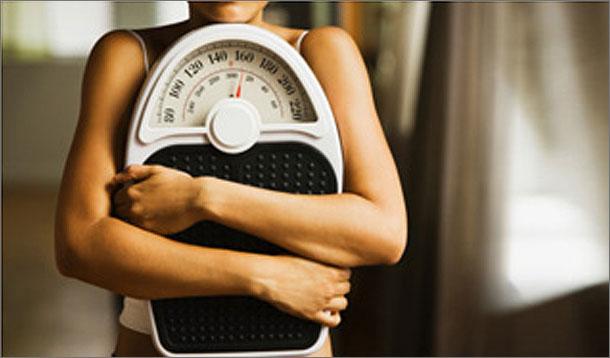
Here you can find some information about eating disorders such as bulimia or anorexia. Click on the link below to read the whole text. In addition, you have the opportunity to listen to a native speaker of English reading the text. Please, play the recording and give your opinion afterwards. Thanks!

Eating disorders are so common in America that 1 or 2 out of every 100 students will struggle with one. Each year, thousands of teens develop eating disorders, or problems with weight, eating, or body image.
Eating disorders are more than just going on a diet to lose weight or trying to exercise every day. They represent extremes in eating behavior and ways of thinking about eating - the diet that never ends and gradually gets more restrictive, for example. Or the person who can't go out with friends because he or she thinks it's more important to go running to work off a snack eaten earlier.

The most common eating disorders are anorexia nervosa and bulimia nervosa (usually called simply "anorexia" and "bulimia"). But other food-related disorders, like avoidant/restrictive food intake disorder, binge eating, body image disorders, and food phobias, are becoming more and more commonly identified.

Anorexia

People with anorexia have a real fear of weight gain and a distorted view of their body size and shape. As a result, they eat very little and can become dangerously underweight. Many teens with anorexia restrict their food intake by dieting, fasting, or excessive exercise. They hardly eat at all - and the small amount of food they do eat becomes an obsession in terms of calorie counting or trying to eat as little as possible.
Others with anorexia may start binge eating and purging - eating a lot of food and then trying to get rid of the calories by making themselves throw up, using some type of medication or laxatives, or exercising excessively, or some combination of these.

Bulimia

Bulimia is similar to anorexia. With bulimia, people might binge eat (eat to excess) and then try to compensate in extreme ways, such as making themselves throw up or exercising all the time to prevent weight gain. Over time, these steps can be dangerous - both physically and emotionally. They can also lead to compulsive behaviors (ones that are hard to stop).
To have bulimia, a person must be binging and purging regularly, at least once a week for a couple of months. Binge eating is different from going to a party and "pigging out" on pizza, then deciding to go to the gym the next day and eat more healthfully
People with bulimia eat a large amount of food (often junk food) at once, usually in secret. Sometimes they eat food that is not cooked or might be still frozen, or retrieve food from the trash. They typically feel powerless to stop the eating and can only stop once they're too full to eat any more, or they may have to go to extreme measures (like pouring salt all over a dessert to make it inedible) in order to get themselves to stop eating. Most people with bulimia then purge by vomiting, but also may use laxatives or excessive exercise.
Although anorexia and bulimia are very similar, people with anorexia are usually very thin and underweight, but those with bulimia may be an average weight or can be overweight.

Taken from: http://kidshealth.org/teen/food_fitness/problems/eat_disorder.html

GENDER DISCRIMINATION

Discrimination of women in the world is still a very real problem. Even though we have made huge strides against it here in America it is still devastating throughout the world.

The United Nations Women's Treaty was implemented a few decades ago was supposed to give women an right to take part in their nations political and public life but that hasn't changed much. In many countries women are still unable to purchase their own property, vote or even wear what they want. In Africa there is still female genital mutilation. Throughout Asia, the former Soviet Union, Latin America, Africa and central and eastern Europe trafficking is still a huge problem.

It is estimated that over 700,000 people are trafficked each year although it is not known exactly how many are women. Most of these women are trafficked for sexual exploitation. The most disturbing is that in parts of the Middle East, “honor killings” are still practiced. These killings can be brought on by women engaging in homosexual acts or sexual acts outside of marriage, wanting to end or prevent and arranged marriage or even dressing too provocatively. In Turkey, there is no protection for women being abused, there are no shelters or help for women in these dangerous circumstances.

In Saudi Arabia women are not allowed to drive. Yemeni women are some of the least empowered women in the world. In Nepal if a woman is raped or assaulted the perpetrators are not punished, they aren't even arrested. These are all examples of extreme discrimination of women throughout the world but we can find more subtle examples of discrimination here in the United States. Even though females have higher education rates and work more than men in the same profession they still get paid less in America.

There is still a twenty percent pay gap between men and women working in the same field. There has however been progress. The pay gap has decreased since it was 28 cents on the dollar in 1988 to now being 11 cents on the dollar in 2007, but in 19 years the only decrease was 17 cents. If we can keep shedding a light on the discrimination of women throughout the world we can hopefully change things for the better.

Taken from: http://www.rainbo.org/discrimination-of-women-throughout-the-world/ 

jueves, 11 de febrero de 2016

ADOPTING VS. BUYING

Consider the Source When Getting a Puppy
If you’re ready to get a new pet, congratulations! You’ll add a loving member to your family and enrich your life. The best place to find a kitten or a puppy is your local animal shelter or breed rescue group. They have plenty of purebreds, mixed-breeds, and big and little dogs or cats -- you’re sure to find a great companion.
And when you adopt from a shelter or rescue group, you’ll give an animal a second chance at finding a home, and you will not add to the nation’s pet overpopulation problem. The reality is that an estimated 3.7 million unwanted pets must be euthanized at animal shelters every year -- many because they could not find families to adopt them.
If you don’t find your ideal companion at your local shelter or breed rescue group, you may choose to purchase a puppy instead of adopting one. In this case, it is important to be certain that you are buying from a responsible breeder that breeds and sells only healthy well-socialized puppies.

Responsible breeders typically do not sell their puppies to pet stores. Most of them want to meet and screen prospective owners to ensure that their puppies are going to good homes. Sadly, most pet store puppies come from puppy mills where animals are not bred for good health and temperament and where they are often raised in inhumane conditions.
Adopt a Disabled Pet!
Disabled pets are incredible. In fact, sometimes they do tremendous heroic and athletic feats! Blind, one-eyed, deaf and three-legged pets can live full happy lives – just spend some time with one and you’ll see how much they can enjoy a wide range of activities and certainly can give just as much love as any pet. Puppies and kittens who are born with a disability, or acquire it early in life, have no idea they’re different, and even adult and older pets can most often adapt to disabilities that humans would find hard to manage. 
Common pet disabilities include being blind, deaf, or losing use of one limb. A pet may be born with their disability, or an injury or illness can result in loosing their sight, hearing, or ability to use one or more of their legs.
Often, when people adopt a puppy or kitten, they don’t realize their pet is blind or deaf right away. Puppies and kittens tend to be a little clumsy and distracted anyway, so bumping into things or not responding when called may be chalked up to normal infantile behavior. Then, they adapt, and learn to navigate the house and communicate with their owner so well, it may take closer observation to discover the disability.
People do not have to do much to accommodate a blind pet’s needs. Dogs and cats use their senses of smell, hearing and touch to get around. But, owners of blind pets usually are careful to keep all furniture in the same place at all times, and even pad sharp edges of furniture. Food and water bowls, litter box, pet bed, and toy stash all need to be in the exact same place for the pet to easily find what she needs.
As for deaf pets, since dogs and cats normally have such a tremendous sense of hearing, it would seem that a loss of this sense would be devastating. But, dogs and cats adapt quite well, and become more sensitive to vibrations they feel. And like all dogs and cats, they are excellent readers of body language, so communicating with them is not as difficult as you may imagine. Deaf pets may not respond to their owner’s spoken words, such as announcing dinnertime, but they read the signals like any other pet. The owner may call their pet by clapping their hands or stomping their feet. Some use a flashlight for visual commands.
Finally, regarding three-legged dogs and cats, they don’t usually need any special accommodations to live normal lives – other than making extra sure they maintain a healthy weight. Their body weight has one less leg to bear it, which causes more stress on the other leg joints. Also, dogs need to have their nails trimmed regularly (as all dogs should anyway) to give them the best footing on hard surfaces. On the other hand, three-legged cats like to jump up on high surfaces like any other cat. It’s the jumping off that can be a problem if there is only one front leg to take the impact. For these cats, the owner needs to make sure all cat-accessible surfaces are a safe distance from the floor.
In conclusion, adopting is better than buying because you contribute to save a life instead of suporting cruel puppy mills. Moreover, every dog or cat deserves to have a good life in a loving home, and should not be overlooked in animal shelters because of a disability. A disability doesn’t necessarily mean the pet will be harder to care for, and certainly won’t make him any less lovable.

Taken from: http://www.americanhumane.org/animals/adoption-pet-care/buying-vs-adopting.html?referrer= and http://www.adoptapet.com/blog/disabled-pets-can-be-amazing/

sábado, 6 de febrero de 2016

PHRASAL VERBS

Let's learn some phrasal verbs with this song. You can find the lyrics below. Enjoy!


"Breakaway"

Grew up in a small town
And when the rain would fall down
I'd just stare out my window
Dreaming of what could be
And if I'd end up happy
I would pray (I would pray).

Trying hard to reach out
But when I tried to speak out
Felt like no one could hear me
Wanted to belong here
But something felt so wrong here
So I prayed I could breakaway.

[Chorus]:
I'll spread my wings and I'll learn how to fly
I'll do what it takes 'til I touch the sky
And I'll make a wish
Take a chance
Make a change
And breakaway
Out of the darkness and into the sun
But I won't forget all the ones that I love
I'll take a risk
Take a chance
Make a change
And breakaway.

Wanna feel the warm breeze
Sleep under a palm tree
Feel the rush of the ocean
Get on board a fast train
Travel on a jet plane far away
And breakaway.

[Chorus]

Buildings with a hundred floors
Swinging 'round revolving doors
Maybe I don't know where they'll take me
But gotta keep moving on, moving on
Fly away, breakaway

I'll spread my wings
And I'll learn how to fly
Though it's not easy to tell you goodbye
I gotta take a risk
Take a chance
Make a change
And breakaway
Out of the darkness and into the sun
But I won't forget the place I come from
I gotta take a risk
Take a chance
Make a change
And breakaway, breakaway, breakaway 
  • To grow up: crecer.
  • To fall down: caer.
  • To end up: acabar (en + verbo), terminar (en + verbo).
  • To reach out: alargar la mano, tratar de alcanzar algo.
  • To speak out: decir lo que se piensa, hablar.
  • To breakaway: alejarse.
  • To move on: pasar página (metafóricamente).

SMARTPHONE ADDICTION

Nowadays, the addiction to smartphones is dramatically increasing, especially, among teenagers. Truth is that they can easily become addicted to smartphones, which is a growing problem. Scientific studies prove one in four teenagers are almost constantly online. This addiction may lead to problems such as obesity due to lack of physical exercise, a failure in the academic year (school), changes in relationships... What do you think of all these? Watch the videos and leave a comment.